
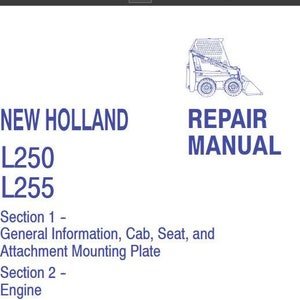
The New Holland L250 and L255 Skid Steer Loader Service Repair Manual is an essential resource for technicians and operators alike. This comprehensive guide covers detailed maintenance procedures, troubleshooting tips, and repair instructions specific to the L250 and L255 models. Users will gain insights on engine diagnostics, hydraulic systems, electrical schematics, and more, ensuring efficient operation and longevity of their skid steer loaders. The manual is structured for ease of understanding, making it accessible for both experienced mechanics and novices. With this manual, buyers will be fully equipped to handle any service tasks required for their equipment.
This manual provides in-depth coverage of all major mechanical and electrical systems found on the L250 and L255 models. Detailed sections address engine performance and maintenance, transmission operation and servicing, hydraulic circuit diagrams and component specifications, brake systems, steering mechanisms, and complete electrical schematics with connector information. Additionally, the manual includes detailed parts lists, torque specifications, fluid capacities, and adjustment procedures essential for proper equipment maintenance and repair.
Professional technicians, workshop mechanics, and independent repair shops will find this manual invaluable for diagnosing issues quickly and performing repairs to manufacturer specifications. Equipment owners who maintain their own machines will benefit from the step-by-step procedures and clear illustrations that guide users through each service task. The structured format allows users to locate relevant information rapidly, reducing downtime and improving service efficiency.
Upon purchase, this PDF manual is available for immediate download, allowing you to access critical repair and maintenance information instantly from any device. There is no waiting period—you can begin referencing the manual within moments of completing your transaction. Whether you’re performing routine maintenance, addressing unexpected failures, or conducting comprehensive inspections, having accurate factory-provided information ensures repairs are completed correctly the first time. This eliminates costly guesswork and prevents expensive damage that results from incomplete or incorrect service procedures.


