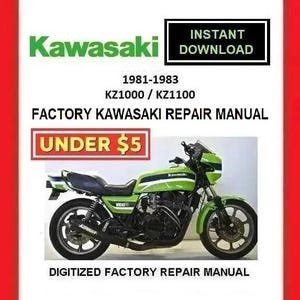
The KAWASAKI KZ1000 / KZ1100 Factory Service Repair Manual covers comprehensive maintenance and repair procedures for the 1981-1983 models. This manual includes detailed specifications, troubleshooting tips, wiring diagrams, and step-by-step instructions for servicing the engine, transmission, brakes, and electrical systems. Buyers will receive a well-structured guide designed to help both novice and experienced mechanics restore and maintain these classic motorcycles effectively.
This factory service manual provides detailed coverage of all major mechanical and electrical systems integral to the KZ1000 and KZ1100 platforms. Sections address complete engine overhaul procedures, including valve clearance adjustments, piston and ring specifications, and complete gasket and seal replacement schedules. The transmission section offers comprehensive guidance on gear engagement, clutch adjustments, and internal component servicing. Hydraulic brake systems receive detailed attention, with procedures for pad replacement, rotor service, and brake fluid specifications. Suspension components, including fork maintenance and rear shock servicing, are thoroughly documented with torque specifications and adjustment procedures.
The cooling system, fuel system, and carburetor specifications are presented with precision, ensuring proper fuel delivery and engine temperature management. Electrical system coverage includes starter motor service, alternator operation, battery specifications, and complete charging system diagnostics. The wiring diagrams provided are essential references for anyone diagnosing electrical faults or undertaking restoration work.
This manual serves professional technicians, workshop mechanics, independent repair shops, and knowledgeable motorcycle owners who prefer working directly from factory documentation. As a PDF file, the manual becomes available immediately upon purchase, allowing users to begin repairs without delay.
Having access to factory service specifications ensures that repairs follow manufacturer intent rather than relying on assumption or incomplete guidance. Accurate specifications and procedures reduce costly mistakes, prevent unnecessary part replacement, and extend the service life of these respected machines.