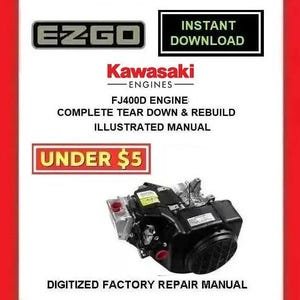
The Kawasaki FJ400D Engine Shop Rebuild Manual provides comprehensive guidance for rebuilding and servicing the FJ400D engine, specifically designed for EZGO vehicles. This manual includes detailed step-by-step instructions, troubleshooting tips, and essential specifications to ensure a successful rebuild. Buyers will receive in-depth information on engine disassembly, inspection, and reassembly, along with diagrams and illustrations to aid in the process. Whether you’re a seasoned mechanic or a DIY enthusiast, this manual is an invaluable resource for maintaining the performance and longevity of your Kawasaki engine.
The manual thoroughly covers all critical engine systems, including the fuel delivery mechanism, ignition timing, cooling circulation, and lubrication pathways. Each section is organized to provide clarity on component relationships and proper assembly sequences, ensuring that technicians understand not only how to disassemble the engine but also the reasoning behind each procedural step. Detailed torque specifications and fastener requirements are included throughout to prevent over-tightening or under-tightening that could compromise engine integrity.
Professional technicians and workshop mechanics will appreciate the organized layout and cross-referenced diagrams that accelerate diagnostic work and reduce labor time on rebuild projects. Independent repair shops can utilize this resource to standardize their rebuild procedures and maintain consistent quality across multiple service calls. Even knowledgeable owners performing their own engine work will find the technical depth and visual aids essential for confident execution of each rebuild phase.
Available as an instant PDF download, this manual is accessible immediately after purchase—no waiting for physical shipment or special ordering. Simply download the file to your device and begin referencing it right away, whether in the shop, at the workbench, or in the field.
Access to accurate, manufacturer-aligned technical documentation eliminates guesswork during complex rebuild operations, directly reducing costly mistakes and unnecessary part replacement that can quickly exceed the value of proper repair guidance.