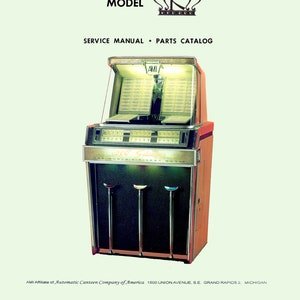
The Jukebox AMI Manual for Model K (1960) provides an in-depth guide to the operation, maintenance, and troubleshooting of this classic jukebox model. It covers essential topics such as wiring diagrams, component specifications, and step-by-step instructions for repairs and adjustments. Buyers will receive a high-resolution manual that ensures clear visibility of all diagrams and text, making it an invaluable resource for jukebox collectors, restorers, and enthusiasts. This comprehensive manual will help ensure your Model K jukebox operates smoothly and efficiently, preserving its legacy for years to come.
Whether you’re performing routine maintenance or undertaking a complete restoration, this manual addresses all critical systems of the Model K jukebox. Detailed sections cover the electrical distribution network, including transformer specifications and circuit protection components essential for safe operation. The mechanical systems receive thorough treatment, with particular attention to the coin mechanism, record selection apparatus, and turntable assembly. The manual also provides comprehensive guidance on the amplifier and speaker configuration, allowing you to diagnose audio issues and optimize sound quality. Lubrication schedules, calibration procedures, and adjustment techniques are clearly documented to help maintain peak performance.
This resource serves professional technicians and workshop mechanics who service vintage audio equipment, as well as independent repair shops specializing in entertainment machines. Knowledgeable owners undertaking personal restoration projects will find the systematic approach invaluable for understanding their machine’s construction and function.
Upon purchase, you receive immediate access to the complete PDF file—no waiting for physical shipment or third-party fulfillment. Download directly and begin referencing the manual within minutes, allowing you to start your repair or maintenance work without delay.
Accurate technical documentation eliminates guesswork during repairs and adjustments, reducing the risk of costly mistakes that could damage irreplaceable components or compromise the machine’s historical integrity.