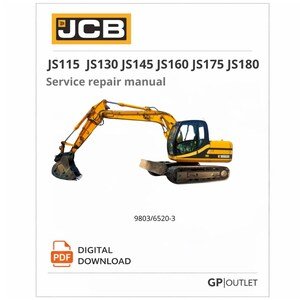
The JCB JS Excavator Service Repair Manual covers comprehensive details for models JS115 to JS180, ensuring optimal maintenance and repair of your equipment. This manual includes step-by-step instructions, troubleshooting guides, wiring diagrams, and specifications necessary for effective servicing. Buyers will receive a detailed resource to help them understand their excavator’s components and systems, making it easier to perform repairs and enhance machinery longevity.
This comprehensive manual provides detailed coverage of all major systems integral to the JS115-JS180 excavator range. You’ll find extensive sections dedicated to engine operation and maintenance, transmission functionality, and the hydraulic systems that power your equipment’s critical movements. Electrical schematics and component locations are thoroughly illustrated, enabling quick diagnosis of electrical faults and circuit troubleshooting. The manual addresses fuel systems, cooling systems, undercarriage components, and cab controls with equal precision, ensuring no aspect of routine or emergency repairs is left unclear.
Professional technicians and workshop mechanics rely on manuals of this caliber to service equipment efficiently and accurately. Independent repair shops benefit from having a single, authoritative reference that reduces the need for multiple documentation sources. Knowledgeable equipment owners also find significant value in understanding their excavator’s architecture and maintenance requirements, allowing for better operator awareness and timely service scheduling.
Upon purchase, you receive immediate access to the complete PDF file, ready for download to your computer, tablet, or mobile device. There is no waiting period—you can begin referencing the manual within moments of completing your transaction. This instant availability proves invaluable when equipment downtime occurs and rapid diagnostic information is essential.
Investing in accurate, manufacturer-specific technical documentation eliminates guesswork during repairs and maintenance procedures. When you work from precise specifications and detailed procedures rather than assumptions, you significantly reduce the risk of costly mistakes that can result in extended downtime, component damage, or safety concerns.