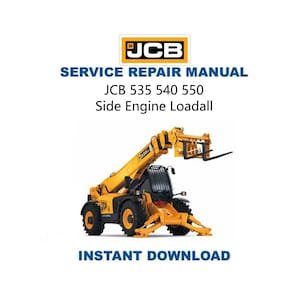
The JCB 535 540 550 Loadall Service Manual is an essential resource for owners and technicians working with these versatile telescopic handlers. This comprehensive repair guide covers all aspects of maintenance, troubleshooting, and repair procedures, ensuring your equipment operates efficiently and safely. Buyers will receive detailed diagrams, specifications, and step-by-step instructions tailored to the JCB Loadall series, enabling both novice and experienced users to perform repairs with confidence.
The manual provides in-depth coverage of critical systems including the diesel engine, transmission, hydraulic circuits, and electrical components specific to the 535, 540, and 550 models. Each section addresses routine maintenance schedules, component removal and installation procedures, adjustment specifications, and diagnostic protocols for common operational issues. Hydraulic system documentation details pump operations, valve configurations, and pressure settings essential for optimal loader performance. Electrical schematics and wiring diagrams enable technicians to troubleshoot charging systems, starter motors, and control circuits with precision.
This resource proves invaluable for professional technicians managing fleet maintenance programs, workshop mechanics requiring manufacturer-specific repair standards, independent repair shops serving construction and agricultural sectors, and knowledgeable equipment owners committed to preserving their investment. The manual eliminates guesswork by providing OEM specifications and factory-approved procedures, reducing both repair time and unnecessary part replacement.
Available immediately as a PDF download, this manual requires no shipping delays or physical storage space. Simply purchase, download, and access the complete technical information on any device—computer, tablet, or smartphone—whenever you need it. Whether performing preventative maintenance, diagnosing unexpected failures, or executing major repairs, having accurate manufacturer documentation ensures work is completed correctly the first time. Quality repair information directly reduces costly mistakes, extends equipment lifespan, and maintains operational reliability when your machinery needs to perform.