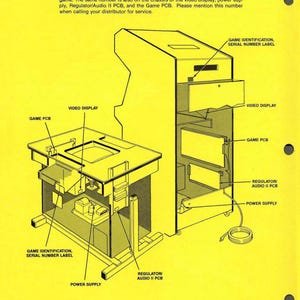
The ATARI NAMCO Dig Dug (Tm-203) 3RD printing Service Manual, Parts Manual, and Owner Manual provides comprehensive information for maintaining and repairing the classic arcade game Dig Dug. This manual includes detailed schematics, troubleshooting tips, and parts lists essential for technicians and arcade enthusiasts. Buyers will receive a complete guide that covers the operational aspects of the game, ensuring that players can enjoy uninterrupted gameplay. With clear diagrams and step-by-step instructions, this manual is an invaluable resource for anyone looking to restore or maintain their Dig Dug machine.
The manual systematically addresses all critical arcade cabinet systems, including the power supply configuration, monitor circuitry, coin mechanism operation, and game logic board architecture. Detailed electrical schematics enable rapid diagnosis of power distribution issues, display problems, and input control failures. The parts manual section identifies every component by manufacturer specification and part number, facilitating accurate replacements without compatibility concerns. Additionally, the owner manual section provides essential guidance on initial setup, cabinet configuration, and routine maintenance protocols that extend machine longevity.
Professional arcade technicians and workshop mechanics will find this documentation indispensable for efficient diagnostics and repair execution. Independent repair shops can reference these materials to maintain service standards and reduce downtime for their clientele. Knowledgeable owners undertaking restoration projects benefit from manufacturer-approved specifications and assembly procedures that ensure proper machine functionality.
This PDF document is delivered as an instant digital download, providing immediate access upon completion of purchase. No waiting periods or shipping delays—simply download and begin referencing the material on your preferred device or printed format. The searchable PDF format allows technicians to quickly locate specific component information, wiring diagrams, and troubleshooting procedures during active repair work.
Accurate, manufacturer-sourced documentation eliminates costly guesswork during repair and restoration. By following verified specifications and procedures, technicians minimize the risk of component damage, electrical faults, and unnecessary part replacement, ultimately reducing overall restoration expenses and project timelines.