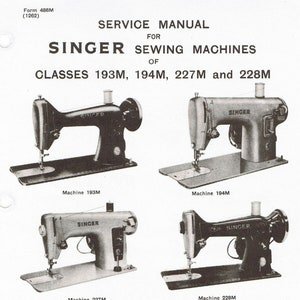
This comprehensive service repair manual covers the Singer Sewing Machine models 193M, 194M, 227M, and 228M. It provides detailed instructions on how to set timing and tension, replace parts, and clean your machine for optimal performance. Buyers will receive a thorough parts list and step-by-step guidance to help troubleshoot and maintain their sewing machines effectively.
The manual systematically addresses the mechanical and operational systems essential to reliable sewing machine function. Detailed sections cover the needle threading mechanism, bobbin assembly procedures, and proper shuttle timing adjustments—critical factors that directly impact stitch quality and machine longevity. The tension calibration guidance ensures balanced stitching across all fabric types, while comprehensive cleaning protocols help prevent thread jams, lint accumulation, and premature wear on internal components.
Each model variant is addressed with model-specific information, allowing users to navigate instructions relevant to their particular machine configuration. The parts list functions as a reference tool for identifying components during disassembly and reassembly, reducing the risk of installing incorrect parts or overlooking small but essential elements.
This resource serves professional technicians and independent repair shops seeking reliable reference material for servicing Singer equipment, as well as knowledgeable owners who prefer to handle maintenance and repairs in-house. Workshop mechanics will appreciate the systematic approach to diagnostics and component replacement, which streamlines repair workflows and minimizes downtime.
The manual is delivered as an instant PDF download, accessible immediately upon purchase. You can begin referencing materials on any device—desktop, tablet, or smartphone—without waiting for physical shipment or dealing with cumbersome paper manuals in the workshop environment.
Accurate technical documentation eliminates guesswork during repair procedures. When you work from verified instructions specific to your machine model, you avoid costly mistakes, unnecessary part replacement, and the frustration of mechanical issues that could have been prevented with proper knowledge and technique.